Cosmology in Contemporary Art
Cosmology in contemporary art has evolved from representation into a structural and conceptual field. Rather than depicting celestial phenomena, contemporary artists increasingly engage with the underlying principles that govern the universe—time, entropy, expansion and transformation.
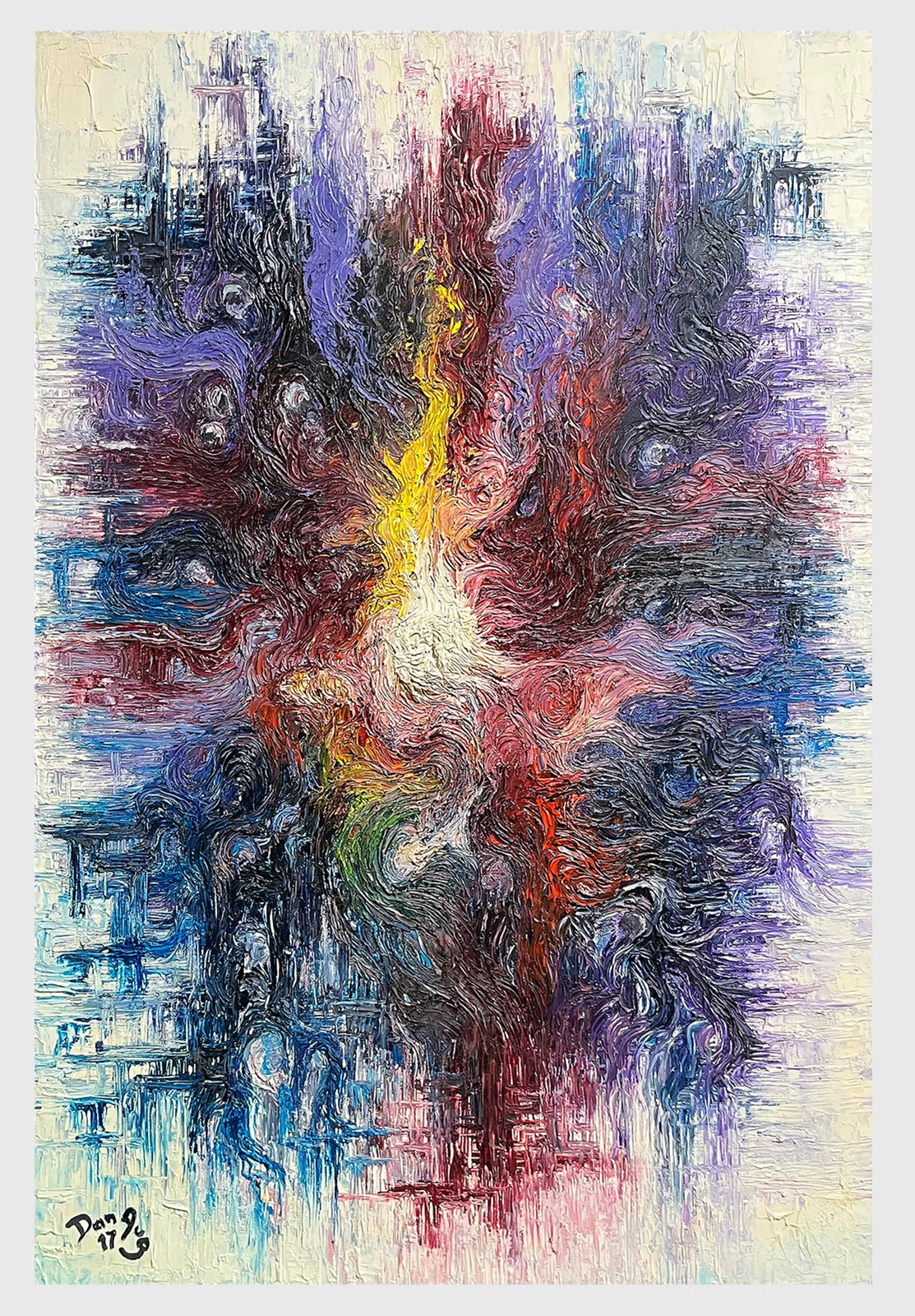
Visual Systems and the Architecture of the Universe
In the work of Dan Aug, cosmology operates as a visual system. His paintings translate astrophysical processes into compositional structures, where energy, density and movement are encoded through abstraction rather than illustration.
This approach positions the artwork as an experiential model: a field where the viewer engages with the logic of the universe through perception itself.
Entropy, Formation and Transformation
Central to this body of work is the concept of entropy. Rather than chaos, entropy is understood as transformation—a continuous reconfiguration of matter and energy. These dynamics are reflected in layered compositions that evoke stellar formation, collapse and regeneration.
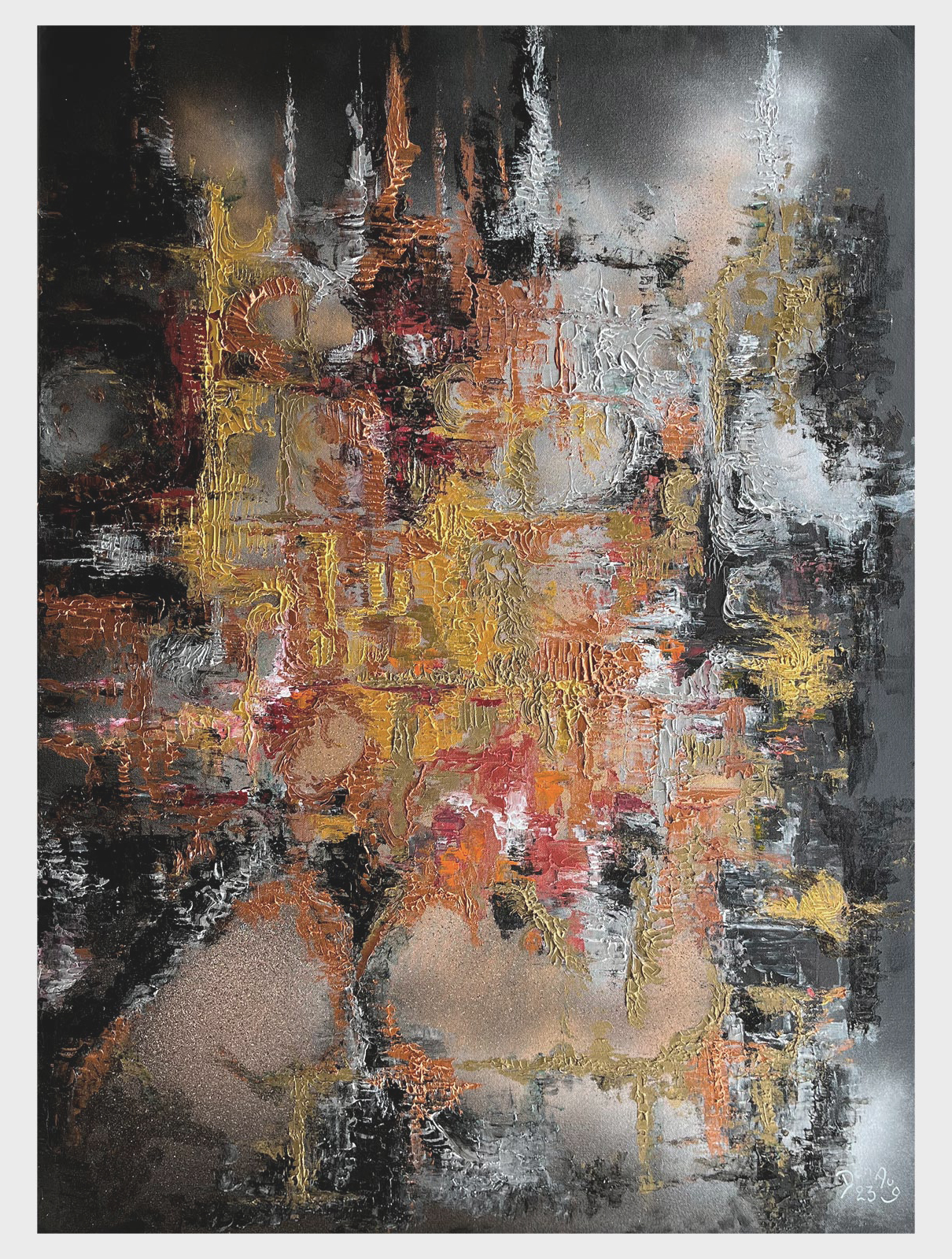
Cosmology and Consciousness
The intersection between cosmology and consciousness is fundamental. If the universe is understood as a structured system, perception becomes a way of accessing that structure. In this sense, art operates not only as representation but as a cognitive interface.
Explore more about art and consciousness and its relationship with perception and knowledge systems.
Cosmology, Egypt and Symbolic Systems
Ancient Egyptian civilization developed one of the most sophisticated cosmological symbolic systems in human history. This lineage is reinterpreted in contemporary practice through works such as the series Dream of a Night in Giza.
Discover how this connects with Egyptian symbolism in contemporary art.
Global Contemporary Context
Today, cosmology in art reflects a broader shift toward interdisciplinary thinking, where science, philosophy and visual language converge. Within this context, Dan Aug’s work contributes to an expanding international dialogue spanning Europe, the United States and the Middle East.
← Back to Main Page Egyptian Symbolism Art & Consciousness