Egyptian Symbolism in Contemporary Art
Egyptian symbolism represents one of the most sophisticated systems of knowledge in human history. In contemporary art, these symbolic structures are not merely referenced—they are reactivated as living frameworks of meaning.
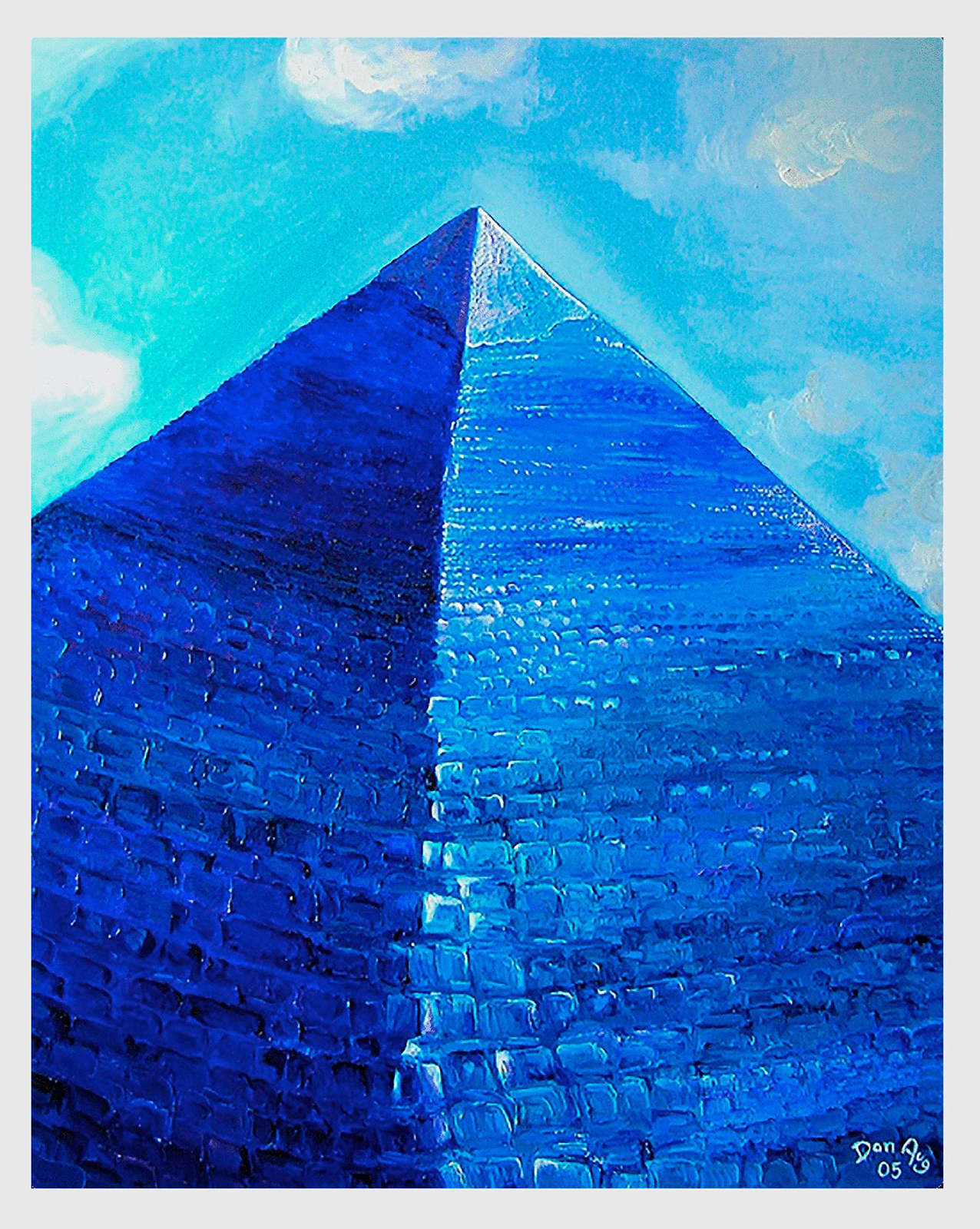
Symbol as Structure
In the work of Dan Aug, Egyptian symbolism operates as a structural language. Concepts such as Ma’at (cosmic order), Duat (transformation) and cyclical time are translated into visual systems that extend beyond representation.
Rather than illustrating ancient Egypt, these works reconstruct its epistemological core within a contemporary visual framework.
Dream of a Night in Giza
The series Dream of a Night in Giza constitutes a central body of work where Egyptian cosmology, symbolic memory and consciousness converge. Through layered compositions and chromatic structures, the paintings evoke both archaeological depth and metaphysical presence.
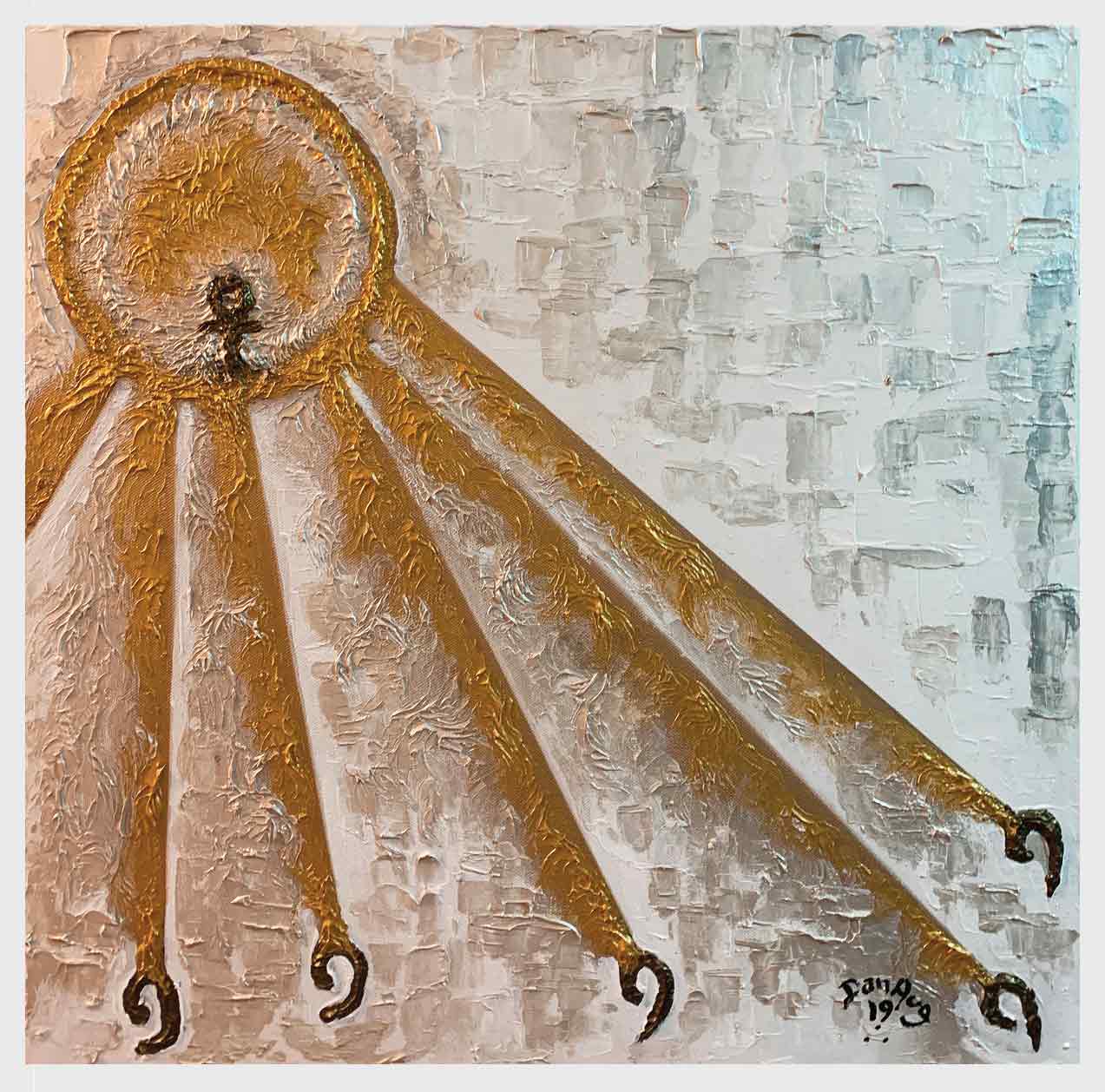
Cosmology and Symbolic Systems
Egyptian symbolism cannot be separated from cosmology. The Nile, the stars and the cyclical structure of time form an integrated system that continues to resonate within contemporary visual practice.
Explore how this connects with cosmology in contemporary art.
Symbolism and Consciousness
Symbols function as interfaces between perception and knowledge. In this sense, Egyptian symbolic systems operate not only as historical artifacts but as cognitive tools that allow access to deeper layers of reality.
Read more about art and consciousness.
Global Contemporary Context
Within the global contemporary art landscape, Egyptian symbolism is undergoing a renewed interpretation. Positioned between archaeology, philosophy and visual abstraction, it becomes a bridge between ancient knowledge and contemporary inquiry.
← Back to Main Page Cosmology Art & Consciousness