Art, Consciousness and Philosophy
Contemporary art increasingly operates at the intersection of perception, knowledge and reality. Within this field, consciousness is not a secondary theme but a structural dimension through which experience itself is articulated.
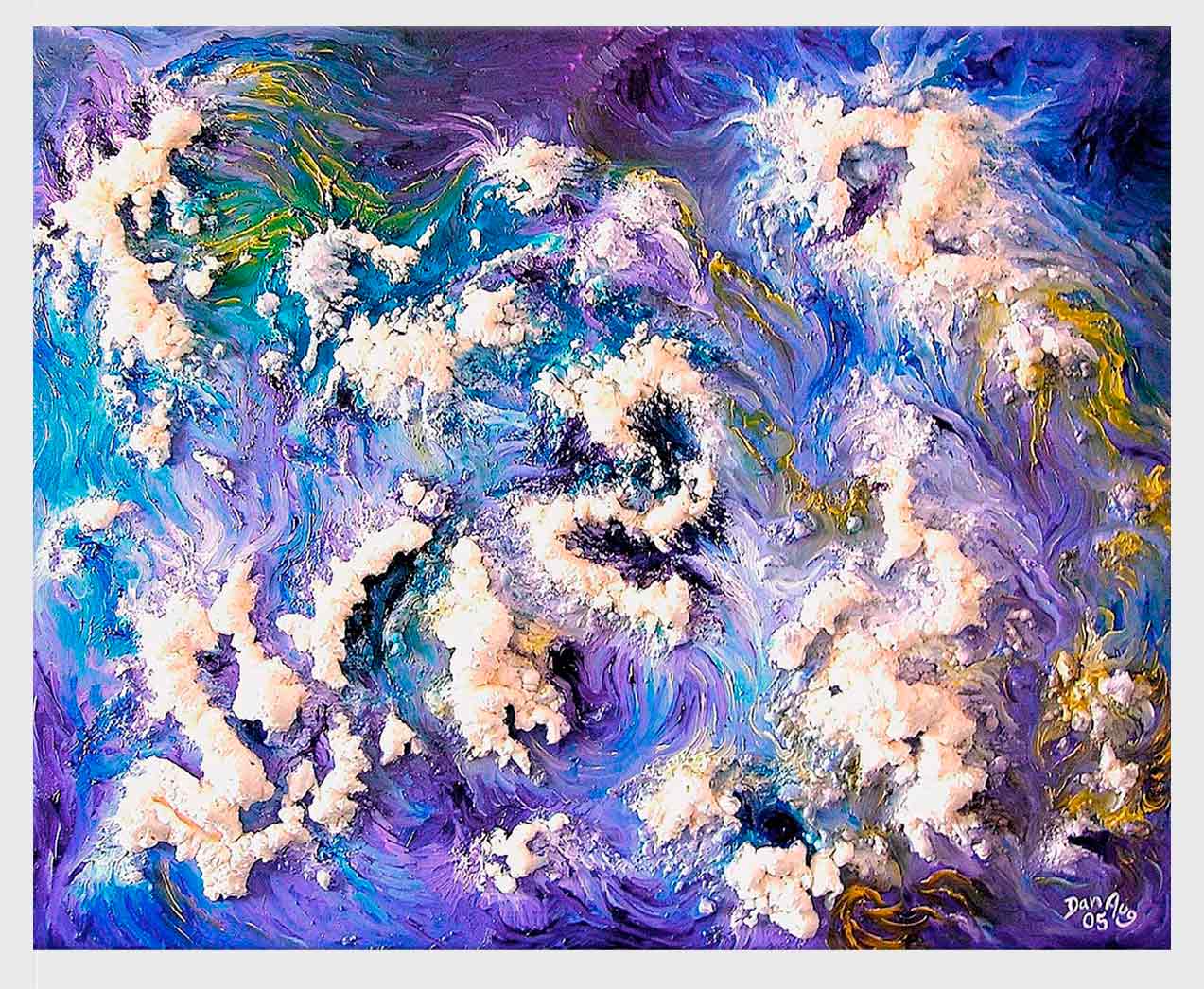
Art as a Cognitive Interface
In the work of Dan Aug, art functions as a cognitive interface. Rather than representing external phenomena, the artwork becomes a system through which perception interacts with the structure of reality.
This approach aligns with developments in both philosophy and science, where consciousness is understood as an active field rather than a passive receiver.
Perception and Structure
Perception is not neutral. It is shaped by symbolic systems, cultural frameworks and cognitive structures. In this context, visual language becomes a tool for reorganizing how reality is experienced.
Explore how this relates to cosmology in contemporary art, where structure replaces representation.
Symbolic Systems and Knowledge
Ancient symbolic systems, particularly those of Egypt, demonstrate how consciousness can be encoded into visual structures. These systems are not decorative—they are epistemological.
See how this expands in Egyptian symbolism in contemporary art.
Philosophy and Contemporary Practice
Philosophy, in this context, is not abstract speculation but an operational framework. Concepts such as time, identity and transformation are embedded into visual compositions, allowing the artwork to function as a site of inquiry.
Global Contemporary Context
Across Europe, the United States and the Middle East, contemporary art is increasingly engaging with questions of consciousness and perception. This shift reflects a broader movement toward interdisciplinary thinking, where art, science and philosophy converge.
← Back to Main Page Cosmology Egyptian Symbolism